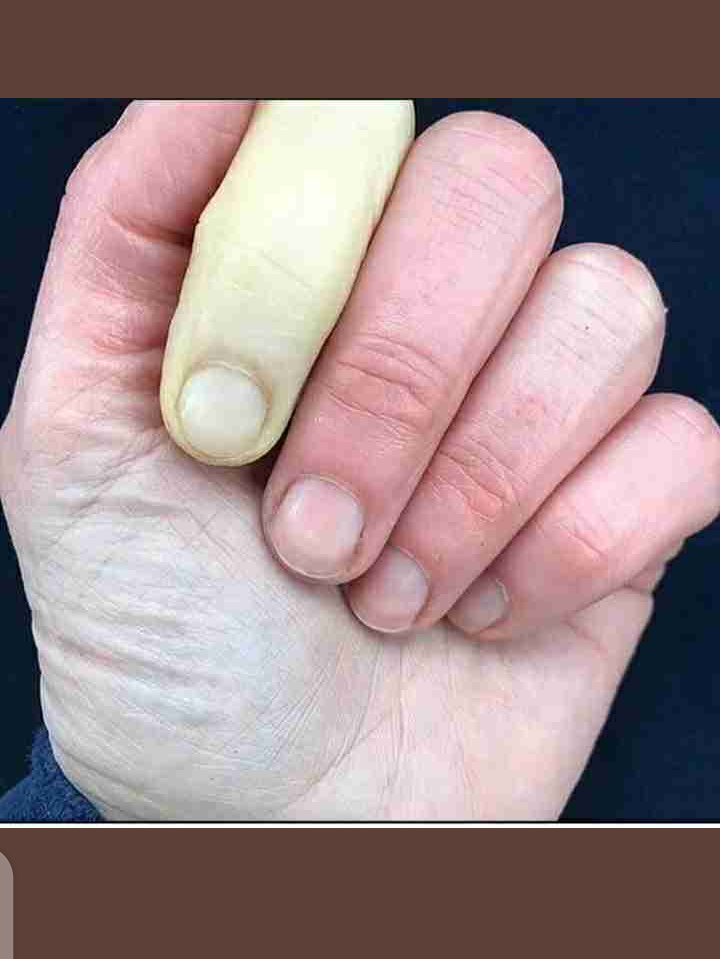
Raynaud syndrome, also known as Raynaud’s phenomenon, is a medical condition in which #spasms of arteries cause episodes of reduced blood flow.
Typically, the fingers, and less commonly the toes, are involved. Rarely, the nose, ears, or lips are affected. The episodes result in the affected part turning white and then blue. Often, #numbness or pain occurs. As blood flow returns, the area turns red and burns. The episodes typically last minutes, but can last several hours.
Episodes are often triggered by cold or emotional stress. The two main types are primary Raynaud’s, when the cause is unknown, and secondary Raynaud’s, which occurs as a result of another condition. Secondary Raynaud’s can occur due to a connective-tissue disorder, such as scleroderma or lupus, injuries to the hands, prolonged #vibration, smoking, thyroid problems, and certain medications, such as birth control pills. Diagnosis is typically based on the symptoms.
The primary treatment is avoiding the cold. Other measures include the discontinuation of nicotine or stimulants use. Medications for the treatment of cases that do not improve include calcium channel blockers and iloprost. Severe disease may rarely be complicated by skin sores or gangrene.
The prognosis of primary Raynaud syndrome is often very favorable, with no mortality and little morbidity. However, a minority develops gangrene. The prognosis of secondary Raynaud is dependent on the underlying disease, and how effective blood flow-restoring maneuvers are.

 Spiritual Healthcare. (Innovative Medicare)