Online writing, a simple excellent money-generating way while learning

dmaosa's avatarInvestorDen

Controversies have it that online writing is a scam, but reliable sources have shown that it is a convenient money-generating mechanism for both protégé and seed writers alike. In the process of writing, in various fields, with specific freelancing skills, dedicated writers are able to earn and learn concomitantly. When you single out such a job, things do not become expensive and/ or difficult. Dissimilar to conventional writing, the online edition allows work right from the comfort of your home or any setting of choice.

With the field of choice coupled with passion, select a topic that you are well acquainted with. There is assured flexibility in that, after choosing the topic of choice in a specific sector to work on, you can decide on the number of accessible hours you are comfortable with. There is a vast number of online writers with distinctive freelancing skills. For instance, you can…

View original post 465 more words

Seasons of a blooming Rose

SEASONS OF A BLOOMING ROSE Blooming seasons are desirable season’s .What do you think of them when we aren’t blooming. When I was younger there were always happy days and sadness only occurred to me for a few minutes after a punishment by either a parent or a teacher. The other days I had practically […]

Seasons of a blooming Rose

Crest syndrome

CREST syndrome is the combination of calcinosis, Raynaud’s phenomenon, esophageal 
dysmotility, sclerodactyly, and telangiectasia. 
Anticentromere antibodies are
 reported in a high percentage of patients with CREST, but in 
a small percentage of pure 
scleroderma patients.

Medline

🔬Autoimmune hepatitis🔬
💡💡💡💡💡💡💡💡💡💡

🎯Presentation:

• Before a diagnosis of autoimmune hepatitis can be made, it is important to exclude other causes: toxic (alcohol, drugs)

• metabolic diseases (Wilson’s disease, haemochromatosis, A1-antitrypsin deficiency), hepatitis and HCV. viral causes, although there is a complex link between autoimmune

.Predominantly a disease of younger women (90% of patients are female).

• May present with acute hepatitis, jaundice, profound malaise and fatigue, and amenorrhoea in women (?autoimmune).

• May be marked extra-hepatic features: vitiligo and alopecia, thyroid disease, pernicious anaemia, type I diabetes mellitus, autoimmune haemolytic anaemia and ITP, rheumatoid arthritis, ulcerative colitis, glomerulonephritis, cryptogenic fibrosing alveolitis, and coeliac disease.

🎯Immunogenetics

• There is a strong association with HLA-B1, B8, DR3, DR4.

🎯Immunopathology

• Major features are piecemeal necrosis of hepatocytes in the periportal region.

• There is an infiltrate of CD4+ T cells and B cells.

• Later stages of the disease show typical cirrhosis.

🔬Diagnosis🔬

• LFTs show markedly elevated transaminases.

• Prothrombin time may be prolonged in late disease.

• Markers of hepatitis virus infection are absent.

• Polyclonal hypergammaglobulinaemia (mainly IgG and IgA).

🎯Autoantibodies

• Antibodies to HCV or HCV PCR+ = exclusion criteria for autoimmune hepatitis!

• addition to the LKM antibodies.
Type 2b hepatitis is associated with antibodies to hepatitis C in

• Autoantibodies to nuclear components, dsDNA, smooth muscle (anti- actin), LKM antibodies, and liver membranes can be detected.

• Low-titre AMA may also be detected.
The pattern of antibodies present has led to a classification scheme for autoimmune hepatitis.

• Autoimmune hepatitis type 1 (AIH-1) is ANA+, smooth muscle antibody (SMA)+, P-ANCA+, and soluble liver antigen (SLA) antibody+. In AIH-1, 50% are ANA
• +/SMA+, 15% are ANA+ only, and 35% are SMA+ only.
• + only. 8% of AIH-1 are SLA

• to therapy; 90% female.
Typically occurs in adults, has a better prognosis, and responds well.• Previously known as lupoid hepatitis. High frequency of extrahepatic features.

• Autoimmune hepatitis type 2a (AIH-2a) is typically liver–kidney microsomal (LKM-1, LKM-3) antibody+ and liver cytosol (LC-1) antibody+.
• + only. 43% of AIH-2 are LC-1 with poor response to therapy.

AIH-2a is seen in children (50% of cases) and has a worse prognosis
• Hypergammaglobulinaemia is less marked; IgA is usually low. Associated with thyroid and gastric parietal cell autoimmunity.

• Autoimmune hepatitis type 2b (AIH-2b).
• No female predominance; occurs in over-40s; milder disease. HCV-associated; HCV-RNA positive, antibodies to HCV positive.
• No extra-hepatic features.
• LKM-1 positive (NB: HCV antigen cross-reactive with P450 (IID6)
• cytochrome).

• Autoimmune hepatitis type 3 (AIH-3) is ANA–, LKM–, SLA+. SMA and AMA are seen less commonly.
• that of type 1.Most patients are women (90%) and have a similar presentation to

• Autoimmune hepatitis type 4 (AIH-4).
• with antibodies to M2 antigen. Overlap syndrome of autoimmune hepatitis and PBC; AMA positive
• There are cases of biopsy-proven but serologically negative hepatitis.
• Tests for both SLA and LC-1 should be performed.
• LKM-1 antibodies recognize the cytochrome P450IID6 and are associated with types 2a and 2b autoimmune chronic active hepatitis.

🎯Other autoantibodies in hepatitis

• Liver–kidney microsomal antibodies may be found in autoimmune hepatitis and recognize different hepatic cytochrome enzymes.

✅LKM-1: cytochrome P450 (IID6). associated with types 2a and 2b autoimmune hepatitis. Antibodies to LKM-1 may be triggered by HCV and HSV as both have proteins sharing homology with P450 (IID6). France only.

✅LKM-2: cytochrome P450 (IIC9). Drug-induced, tienilic acid, in antibod

Raynaud syndrome

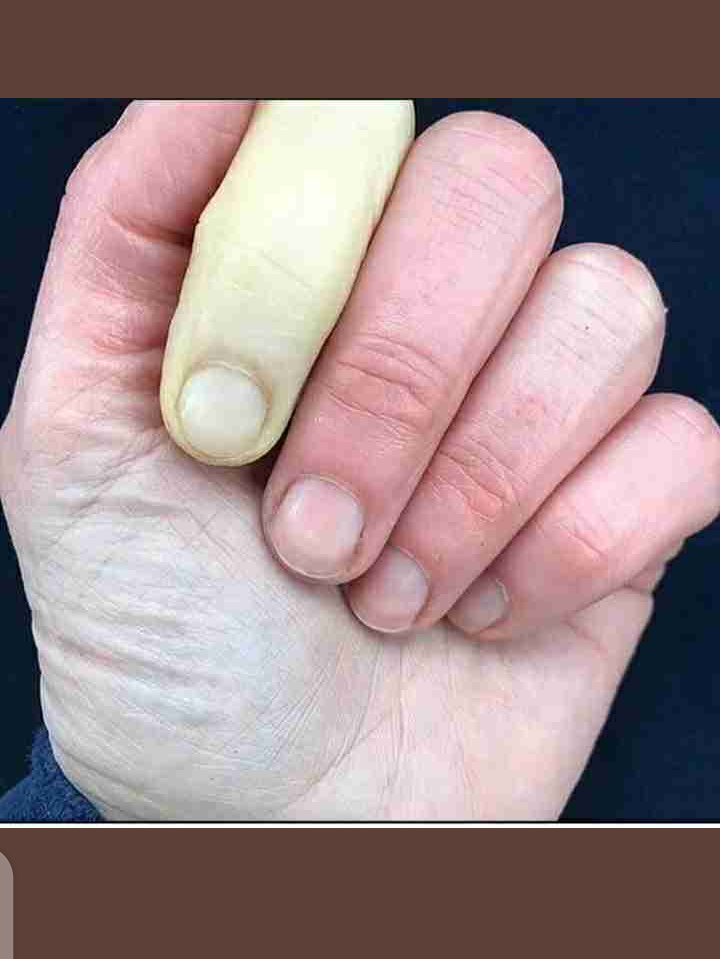
Raynaud syndrome, also known as Raynaud’s phenomenon, is a medical condition in which #spasms of arteries cause episodes of reduced blood flow.
Typically, the fingers, and less commonly the toes, are involved. Rarely, the nose, ears, or lips are affected. The episodes result in the affected part turning white and then blue. Often, #numbness or pain occurs. As blood flow returns, the area turns red and burns. The episodes typically last minutes, but can last several hours.

Episodes are often triggered by cold or emotional stress. The two main types are primary Raynaud’s, when the cause is unknown, and secondary Raynaud’s, which occurs as a result of another condition. Secondary Raynaud’s can occur due to a connective-tissue disorder, such as scleroderma or lupus, injuries to the hands, prolonged #vibration, smoking, thyroid problems, and certain medications, such as birth control pills. Diagnosis is typically based on the symptoms.

The primary treatment is avoiding the cold. Other measures include the discontinuation of nicotine or stimulants use. Medications for the treatment of cases that do not improve include calcium channel blockers and iloprost. Severe disease may rarely be complicated by skin sores or gangrene.
The prognosis of primary Raynaud syndrome is often very favorable, with no mortality and little morbidity. However, a minority develops gangrene. The prognosis of secondary Raynaud is dependent on the underlying disease, and how effective blood flow-restoring maneuvers are.

Heart defects

A mega-size globular heart!!
This very large heart has a globoid shape because all of the chambers are dilated. It felt very flabby, and the myocardium was poorly contractile.
This is an example of a cardiomyopathy. This term is used to denote a disease where the heart muscle (myocardium) becomes weak and unable to contract with sufficient force (decreased contractility leading to a decreased stroke volume) to provide adequate perfusion (reduced cardiac output) for the cells of the body, but there is no specific histologic finding.
Dilated cardiomyopathy is a progressive disease of heart muscle that is characterized by ventricular chamber enlargement and contractile systolic dysfunction with normal wall thickness. The right ventricle may also be dilated and dysfunctional. Patients experience fatigue, dyspnea on exertion, shortness of breath, cough, noctural dyspnea (at night) and orthopnea (dyspnea when lying flat).
Diagnosis is made by echocardiogram, which typically shows dilated ventricles with diffuse hypokinesia resulting in a low ejection fraction (I.e. systolic dysfunction).
Treatment is largely supportive, and mainly involves the management of symptoms caused by congestive heart failure with ACE inhibitors, beta blockers, angiotensin II receptor blockers and nitrates.
Cardiac transplantation is an option for patients with severe heart failure, and a left ventricular assist device, or LVAD, may help to bridge a patient while awaiting transplantation.
Photo by @doctor_akira

Rheumatic fever.

Rheumatic Fever

Rheumatic fever is an inflammatory disease that occurs after one has had a streptococcal infection of the upper respiratory tract. It is does not involve any suppuration and is systemic often affecting the cardiac, CNS, skin and the subcutaneous tissues beneath the skin. The major organ that gets affected is the heart.

When Rheumatic fever progresses to the chronic stage, it causes Rheumatic heart disease which is a disease that affects all the cardiac layers.

The etiology of Rheumatic Fever is a precedence of group A beta-haemolytic streptococcal infection of the throat or the upper respiratory tract.

Pathogenesis

The body of an individual susceptible to Rheumatic Fever responds to streptococcal infection of the throat by producing antibodies against the streptococcal bacteria.

The M-protein molecules of streptoccal bacteria mimic those of the human body and hence antibodies produced against the bacteria also act against the human body tissues.

An autoimmune reaction therefore occurs causing cardiac lesions and extracardiac lesions such as those in the lungs, central nervous system and the pleura, subcutaneous tissue and the skin, periarticular tissue, synovial membrane and the erterial wall.

Clinical manifestations

Presence of any two of the following are used as the clinical diagnosis of RF:

  • Erythema marginatum
  • Polyarthritis
  • Sydenham’s Chorea
  • Carditis
  • Polyarthritis
  • Subcutaneous nodules

Laboratory tests confirming streptococcal throat infection are used as supportive evidence for the clinical diagnosis.

Major and minor criteria

Prognosis

One may recover completely if the heart is not involved. With involvement of the heart, RF often recurs. The complications of RF include:

  • Myocarditis. This causes serious arrhythmias.
  • Chronic valvular deformities mostly from the mitral stenosis. These are usually long-term conditions.
  • Full-blown cardiac (heart) failure due to heart decompensation. Compensation occurs first but later decompensation occurs.
  • Death usually due to cardiac failure, embolism and endocarditis caused by bacteria.